Polymarket Pulls Nuclear Detonation Market as Insider Trading Scrutiny Closes In

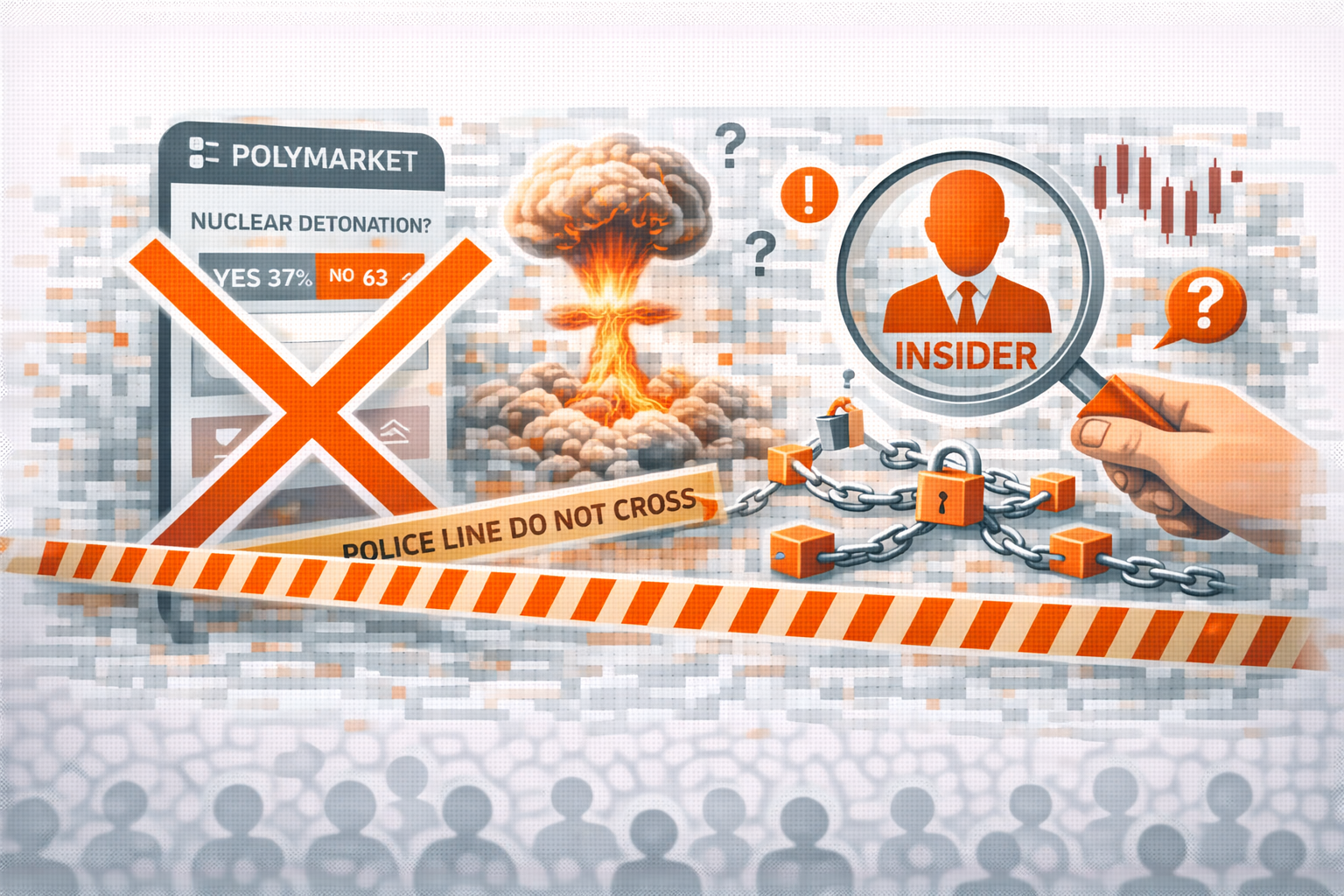
Polymarket has been running nuclear detonation contracts for years. They’ve always resolved to “No.” Nobody seemed particularly troubled by them, until the US and Israel struck Iran, a 22% probability flashed across X, and the backlash arrived fast enough to take the market down within hours.
The contract, which had offered resolution timelines of March 31, June 30, and before 2027, now shows the message “The event has been archived.” Polymarket has not publicly explained the decision.
The market wasn’t small. The 2026 contract had drawn at least $838,000 in volume. Earlier versions were larger: the 2025 contract recorded more than $1.7 million in wagers; the 2023 version drew nearly $700,000, at one point implying a 19% detonation probability. What changed this week however wasn’t the existence of the market, it was the context around it.
The Insider Trading Problem That Won’t Go Away
Prediction markets have spent the past several months accumulating a genuinely awkward track record on this. In January, an anonymous trader made more than $400,000 on suspiciously timed bets placed shortly before Venezuelan President Nicolás Maduro’s arrest.
Last month, Israeli authorities charged two individuals for allegedly using classified military intelligence to place wagers during Israel’s 12-day war with Iran. Then came the February 28 strikes, and with them, blockchain surveillance firms flagging a series of newly created wallets that earned over $1 million through bets placed hours before the operations commenced.
The Iran conflict has been especially damaging for Polymarket’s reputation on this front. More than $529 million in bets flowed through geopolitical contracts tied to the timing and outcomes of the strikes, volumes that dwarfed normal activity and drew immediate comparisons to the Maduro episode.
The nuclear detonation market, sitting in the middle of all this, became an obvious lightning rod. Journalist David Sirota posted on X that Polymarket had “created a market that would monetize a nuclear attack amid increasing concerns that bets are happening among government insiders who can make military decisions.” The post circulated widely.
Rival platform Kalshi has had its own version of this. A market on Khamenei’s fate drew more than $54 million in trades. When his death was confirmed, Kalshi invoked a “death carveout” clause, settling at the last traded price rather than paying out in full, angering traders and raising its own questions about how these platforms handle markets they weren’t fully prepared to resolve.
Regulators Are Paying Attention
Meanwhile, Washington seems to have been watching. Six Democratic senators led by Adam Schiff sent a letter to the Commodity Futures Trading Commission last week urging the agency to prohibit prediction contracts tied to an individual’s death.
CFTC Chair Michael Selig responded on Tuesday, signaling that the agency is preparing new rulemaking and guidance for the sector and telling industry participants to “stay tuned.”
The CFTC had already proposed rules in 2024 that would bar regulated exchanges from listing event contracts tied to war, terrorism, or assassination, but those rules have not yet been finalized, and Polymarket, which operates offshore, has largely remained outside their reach.
Prediction market analyst Dustin Gouker put it plainly in comments to Decrypt: “Whatever small amount of utility we might get from learning the probability of that happening is offset by how terrible it is to let people speculate on that outcome. People profiting from inside information is grotesque.”
Polymarket’s broader value proposition has always rested on the argument that aggregated market odds produce better predictions than expert consensus.
That argument is harder to make cleanly when the market in question is a nuclear weapon, and when the odds are being shaped, at least in part, by people who may already know something.