How the US-Israel War on Iran Hit Crypto, and What Happened Next

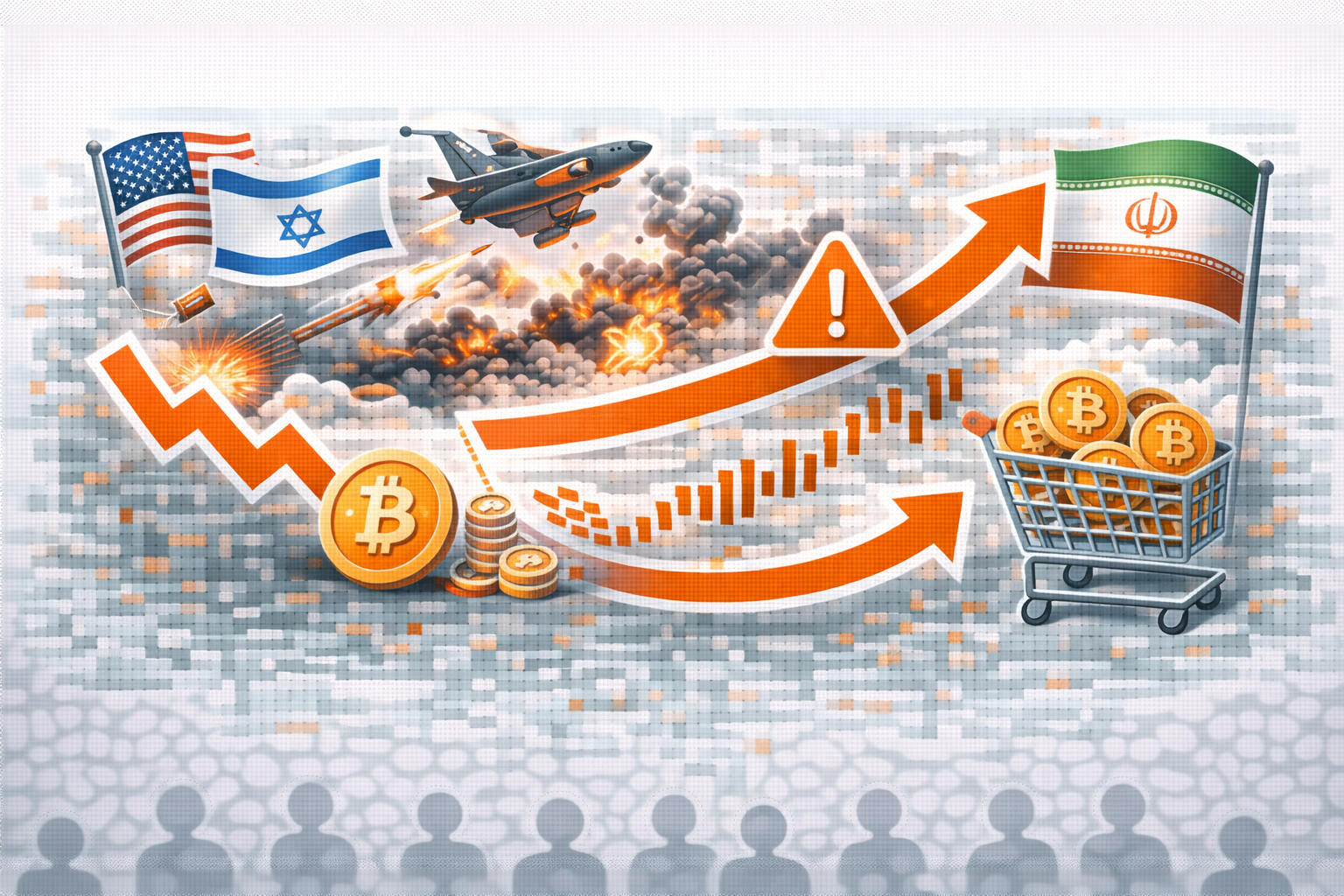
The US and Israel launched coordinated strikes on Iran early Saturday morning, February 28. By the time most crypto traders on the East Coast woke up, the damage had already been done, and partially undone. Bitcoin slid to around $63,000 on the initial news, down roughly 4% from where it had been trading.
Ethereum dropped below $2,000. Solana fell to $83.41, and XRP slipped to $1.35. The total crypto market cap shed over $128 billion in hours, with liquidations concentrated almost entirely in leveraged long positions.
It was ugly. But compared to what many crypto investors had feared, it was contained. The Fear and Greed Index had already been sitting at 14, signaling deep fear territory, heading into the weekend.
Bitcoin was already down roughly 50% from its all-time high of $126,199, set in October 2025. So a lot of the excess had already been wrung out of the market before the first strike landed. When the shock came, there wasn’t that much leverage left to unwind.
The Khamenei Bounce, and What It Revealed for Crypto Market
Then something stranger happened. As Iranian state media confirmed that Supreme Leader Ayatollah Ali Khamenei had been killed in the strikes, Bitcoin shot back to $68,196, erasing nearly all of Saturday’s losses in hours, on thin Sunday liquidity.
Ethereum followed, gaining as much as 4.58% to trade back above $2,000. The logic, if you can call it that, appeared to be that a leadership vacuum in Tehran raises the odds of de-escalation, and traders moved first and asked questions later.
The bounce didn’t fully hold. By Sunday afternoon in New York, Bitcoin had settled back around $65,300, and Ethereum was trading 2.3% weaker at $1,912.
By Monday, though, Bitcoin was above $69,000 and Ethereum had gained 6% as US equity markets opened far more calmly than overnight futures had suggested. The Nasdaq closed down just 0.1%. Crypto, in this case, had front-run both the panic and the recovery.
There’s a pattern here that keeps repeating. In June 2025, when Israel first struck Iranian nuclear facilities, Bitcoin dropped to around $103,000, and by October had climbed above $125,000.
In April 2024, during Iran’s direct missile attack on Israel, BTC fell about 7%, then broke to new all-time highs months later. QCP Capital drew the same parallel this week, noting that the June 2025 strike had been followed by a rally to $123,000 within weeks. Options traders appear to have drawn similar conclusions, buyers loaded up on upside contracts targeting $74,000–$75,000, expiring March 27.
The Bigger Risk Isn’t even the War
What the market is actually watching may have less to do with Bitcoin’s price and more to do with oil. Iran sits at the geographic center of roughly a third of global crude supply.
The Strait of Hormuz, the narrow passage connecting the Persian Gulf to the Arabian Sea, moves approximately 20% of global oil shipments, and Iran has threatened to close it.
If that threat materializes, Brent crude would spike, inflation expectations would re-accelerate, and the Fed’s already-complicated rate path would get considerably messier.
A March rate cut now appears effectively off the table following hotter-than-expected PPI data last week, a strong ISM manufacturing print, and geopolitical pressure pushing energy prices higher.
Asian markets took a notable hit on Tuesday, South Korea down 7%, Japan down 6%, India and the UK each around 3%, a global risk-off move that could feed back into crypto if it deepens.
According to BitMEX co-founder Arthur Hayes, the longer the US stays militarily involved in Iran, he argued, the more likely the Fed is to eventually cut rates or expand the money supply to fund war spending, which has historically been a tailwind for Bitcoin.
It’s a contrarian view, and not one that would comfort anyone holding altcoins through a prolonged energy crunch. But it’s not without historical precedent.
One corner of the market that genuinely benefited from the chaos: Hyperliquid, the decentralized derivatives platform, set a new open interest record over the weekend and was cited in Bloomberg as the primary venue for traders hedging commodity exposure in real time.
And on the ground in Iran, outflows from Nobitex, the country’s largest crypto exchange, spiked 700% in the minutes following the first airstrike, basically ordinary people, moving fast and trying to protect what they had.